

Core Architecture and Protocols for Smart Home Automation

Smart home automation can make everyday life easier, more comfortable, and more convenient, and these useful ideas are a great place to start!
In October 2026, the idea of a truly “smart home” has moved beyond science fiction, becoming an accessible reality for many. We are now living in an era where our homes can anticipate needs, enhance comfort, and improve daily life through intelligent automation. But with countless options available, what truly makes a home automation “useful”?
We understand that navigating connected devices can feel overwhelming. That’s why we’ve created a guide to the most universally beneficial home automations. We focus on solutions that bring real value to every household member, regardless of their technical skill.
This article will show you how smart technology can transform your living space. We will explore practical ways to enhance daily convenience, boost energy efficiency, and strengthen security. Whether you are considering a comprehensive smart-home and smart-building installation or simply looking for a few impactful upgrades, we will help you discover solutions that make life easier and more enjoyable.
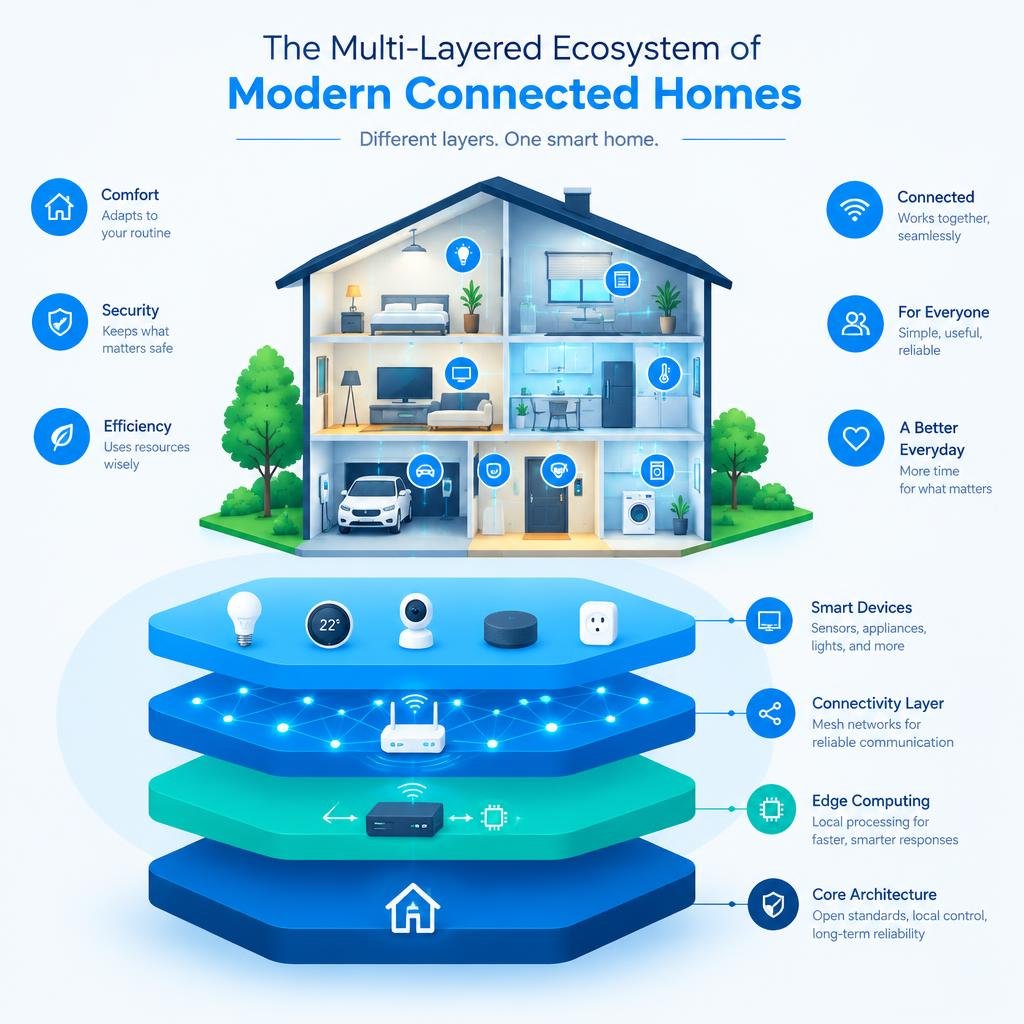
The foundation of any truly useful home automation system lies in its core architecture and the communication protocols it employs. As of October 2026, we’ve seen significant advancements towards open standards and local execution, moving away from fragmented, cloud-dependent ecosystems. This shift is crucial for reliability, privacy, and long-term sustainability. Modern smart homes increasingly rely on mesh networks, which create a robust, self-healing web of devices, ensuring low-power communication and consistent performance. Edge computing, where data processing happens locally on devices or within the home network, is becoming the preferred model, enhancing responsiveness and reducing reliance on external servers.
Interoperability Across Connected Devices
One of the biggest hurdles in early smart home adoption was the lack of interoperability. Different brands often spoke different “languages,” leading to compatibility headaches. However, the landscape has dramatically improved with the rise of universal standards like Matter and Thread. Matter, a royalty-free connectivity standard, enables cross-platform integration, allowing devices from Apple Home, Google Home, Amazon Alexa, and other ecosystems to communicate seamlessly. Thread, a low-power, mesh networking protocol, creates self-healing networks where devices can relay signals to each other, extending coverage and reliability. Devices known as “border routers” bridge the Thread network to your home’s Wi-Fi, creating a unified control experience. This convergence means we can now choose devices based on their utility and design, rather than being locked into a single brand’s ecosystem.
Privacy-First Control and Local Processing
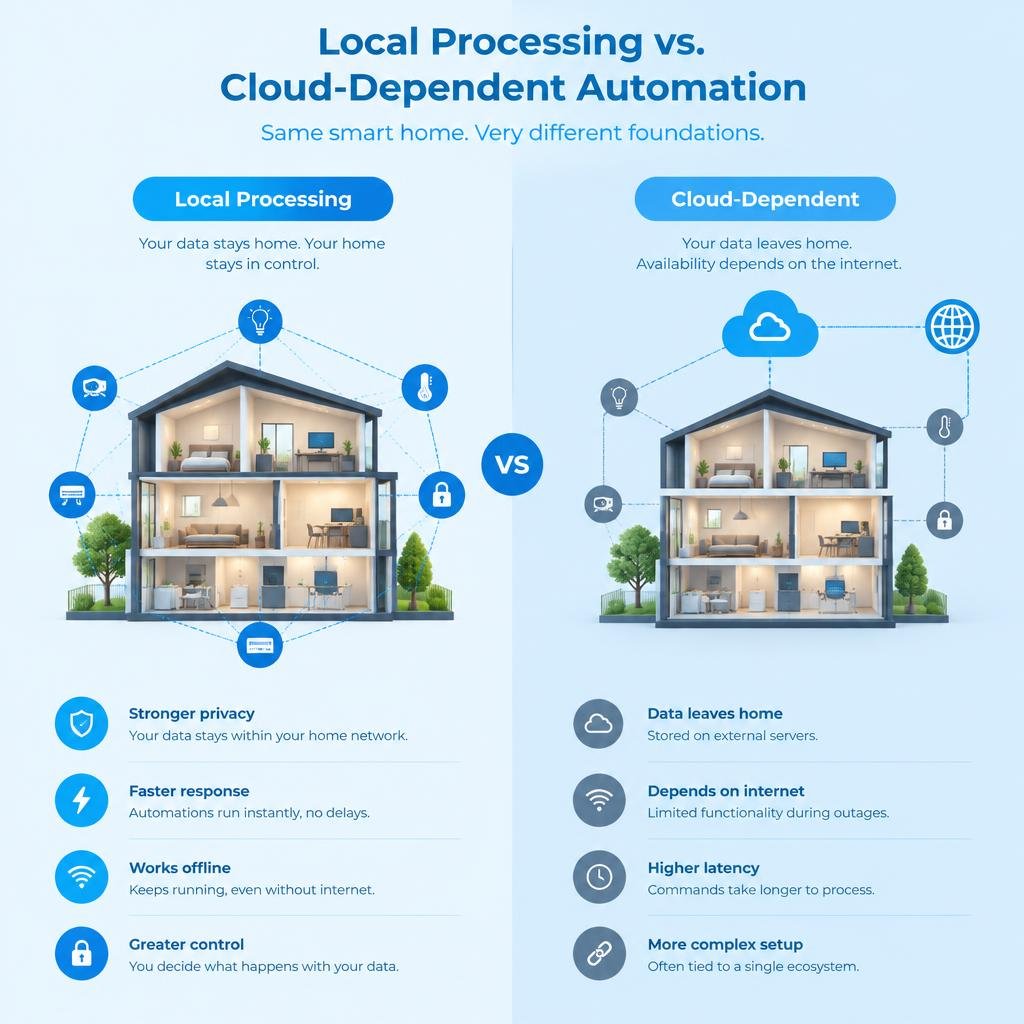
In an increasingly data-conscious world, privacy-first control has become a paramount concern for smart home users. Local processing, exemplified by platforms like Home Assistant, ensures that your personal data remains within your home network. This approach provides data sovereignty, meaning you retain full control over your information. By minimizing or eliminating zero-cloud dependency, these systems offer enhanced security against external breaches and maintain full offline functionality. This is particularly beneficial during internet outages, as your automations continue to run without interruption. The localized processing also dramatically reduces latency, making automations feel instant and responsive. Furthermore, many local systems incorporate localized encryption, adding another layer of protection to your smart home communications.
Practical Automations for Daily Comfort and Efficiency
Beyond the technical backbone, the true utility of home automation shines through its ability to simplify and enhance daily life. Imagine a home that intuitively responds to your presence, adjusting ambient lighting as you move from room to room, or moderating the climate to your preferred comfort level before you even arrive. Modern systems leverage sophisticated presence detection to understand who is home and where they are, tailoring the environment accordingly. Daylight harvesting, for instance, automatically adjusts indoor lighting based on natural light levels, saving energy and creating a more pleasant atmosphere. The goal is to create intuitive controls that are unobtrusive, making technology work for us without requiring constant interaction.
Designing Smart Home Automation for Energy Efficiency
Energy efficiency is a major driver for many considering smart home upgrades. Smart thermostats are a prime example, learning your schedule and preferences to optimize HVAC usage, often pausing heating or cooling when no one is home or when windows are open. Beyond temperature control, automations can tackle other areas of energy consumption. Load monitoring through smart plugs can identify “phantom loads” – devices that consume power even when turned off – allowing you to schedule them to power down completely when not in use. Dynamic shading, achieved through automated blinds or smart windows, can reduce heat gain in summer and retain warmth in winter, significantly impacting heating and cooling costs. These systems not only save money but also contribute to a more sustainable lifestyle.
Simplifying Household Routines and Maintenance
Home automation can be a powerful ally in managing the daily grind of household chores and maintenance. Imagine receiving appliance alerts when your washing machine cycle is complete or your robotic vacuum gets stuck. Systems can be configured for chore tracking, reminding you when it’s time to take out the garbage or feed the pets. Environmental monitoring, such as air quality sensors, can trigger ventilation systems when pollutant levels rise. For preventative maintenance, smart systems can track filter usage in HVAC units or water purifiers, sending reminders for replacement. Here are some high-utility household routine automations that can make a significant difference:
- Automated Laundry Notifications: Receive a text or voice alert when your washing machine or dryer cycle finishes.
- Smart Pet Feeding: Dispense pet food on a schedule, with options for remote feeding or adjusting portions.
- Garbage/Recycling Reminders: Get a notification on collection day, ensuring bins are out on time.
- Smart Appliance Monitoring: Be alerted to potential issues with refrigerators, dishwashers, or other appliances before they become major problems.
- “Dinner Bell” Automation: A simple button press or voice command can announce dinner across smart speakers and set a timer.
- Watering Schedules: Automate garden irrigation based on weather forecasts, soil moisture, or time of day.
- Automated Cleaning Modes: Trigger specific lighting, HVAC, and music settings when “cleaning mode” is activated.
Enhancing Security, Safety, and Entry Management
The peace of mind that comes with a secure home is invaluable. Home automation offers robust solutions for perimeter monitoring, access control, and automated deterrence, significantly bolstering your home’s defenses. Integrated residential security systems can combine smart locks, security cameras, motion sensors, and alarms into a cohesive network. Crucially, these systems can also facilitate hazard mitigation, with sensors designed to detect and respond to environmental threats. The key is to implement these automations with multi-factor triggers to prevent false alarms and ensure genuine threats are addressed effectively.
Multi-Layered Access and Perimeter Control
Modern smart locks are at the forefront of access control, offering keyless entry via codes, fingerprints, or smartphone apps. Beyond simple locking mechanisms, automations can enhance security through arrival validation. For instance, your security system can automatically disarm when your smartphone’s presence is detected within a geofenced area, and re-arm when you leave. For sensitive access points like garage doors, we highly recommend multi-factor presence verification. Instead of opening solely based on phone presence (which could be a security risk if your phone is lost or stolen), combine it with a secondary check, such as your vehicle’s Bluetooth connection. This ensures that the garage only opens when both you and your car are genuinely present. Automated illumination can also deter intruders, with exterior lights turning on or flashing if motion is detected after hours. All entry and exit events can be logged, providing a clear audit trail.
Proactive Hazard and Environmental Protection
Beyond deterring intruders, smart homes excel at proactive hazard and environmental protection. Water leak sensors placed under sinks, near water heaters, or in basements can detect moisture instantly. Upon detection, these systems can trigger an alarm and, more importantly, activate motorized valves to automatically shut off the main water supply, preventing catastrophic property damage. Freeze detection sensors can alert you to dangerously low temperatures in vulnerable areas, helping prevent burst pipes. Advanced systems can also integrate air quality regulation, monitoring CO2, VOCs, and particulate matter, and activating ventilation or air purifiers as needed. These emergency alerts are often sent directly to your smartphone, ensuring you’re informed even when away from home.
Strategic Implementation: From Simple Triggers to Professional Setup
Embarking on your home automation journey can be approached in various ways, from a phased deployment of simple devices to a comprehensive, professionally installed system. For many, starting small with practical physical triggers and smart switches is the most accessible entry point. However, for those seeking a fully integrated and robust solution, careful infrastructure planning and potentially professional assistance are key. When considering a significant upgrade, exploring options for a complete smart-home and smart-building installation can provide a seamless and expertly configured system designed for your specific needs.
Practical Sensor and NFC Tag Integrations
Some of the most practical and cost-effective automations come from integrating simple sensors and NFC tags. Motion triggers are invaluable for lighting in utility areas, hallways, or closets, ensuring lights turn on only when needed and off when the space is empty. Contact sensors on doors and windows can trigger alerts if left open, pause HVAC, or arm security systems. Smart buttons offer a physical, intuitive way to trigger complex scenes without needing a phone or voice command – perfect for non-technical family members. NFC stickers, inexpensive and versatile, can be placed strategically around the home (e.g., on a nightstand for a “Good Night” routine, or by the front door for an “Away” scene). Tapping your NFC-enabled smartphone against these tags can activate context-aware scenes, simplifying daily actions with a single tap.
Beginner Steps to Implement Smart Home Automation
For beginners, home automation can feel overwhelming. The key is to start with entry-level devices that offer immediate, tangible benefits. Smart plugs are an excellent starting point, allowing you to automate existing “dumb” appliances like lamps or coffee makers. Smart lighting switches, rather than individual smart bulbs, are often a better choice for main living areas as they prevent guests from accidentally cutting power to your smart circuits. Before buying any devices, take time for habit mapping – identify repetitive tasks or pain points in your daily routine that automation could solve. This helps you choose automations that genuinely improve your life. Always aim for a scalable architecture, choosing devices and platforms that allow you to expand your system gradually without having to start from scratch. Starting with one or two high-impact automations builds confidence and provides a clear path forward.
Frequently Asked Questions About Smart Homes
How do local automation systems protect user privacy?
Local automation systems, such as those powered by Home Assistant, prioritize user privacy by processing all data directly within your home network. This means your personal information, device usage patterns, and automation triggers are not sent to external cloud servers. This approach ensures network isolation, reducing the risk of data breaches associated with third-party cloud services. By relying on non-cloud communication for device control and data processing, these systems operate independently of internet connectivity for core functions, further safeguarding your privacy. Many also incorporate encryption protocols for communication between devices, adding an extra layer of security.
What is the most effective automation for beginners to start with?
For beginners, the most effective automations are those that offer immediate, noticeable benefits without requiring complex setup. Motion-activated lighting in high-traffic or utility areas (like hallways, pantries, or laundry rooms) is an excellent starting point, providing convenience and energy savings. Automated smart locks are another high-impact choice, offering keyless entry and enhanced security. Similarly, scheduling thermostats to adjust based on your daily routine or presence can lead to significant energy savings and improved comfort. These high-impact conveniences build confidence and demonstrate the value of smart home technology quickly.
How does automated water leak detection prevent property damage?
Automated water leak detection systems prevent property damage by providing early warning and, in many cases, immediate intervention. They consist of moisture sensors placed in vulnerable areas (e.g., under sinks, near washing machines, water heaters, or in basements). When a sensor detects water, it triggers a rapid notification to your smartphone or other smart devices. Crucially, advanced systems can be integrated with automatic shut-off valves installed on your main water line. Upon detecting a leak, these valves automatically close, preventing further water flow and significantly mitigating potential damage, saving you from costly repairs and insurance claims.
Conclusion
As we navigate October 2026, the evolution of home automation has delivered truly useful solutions that enhance our daily lives. From the foundational shift towards open standards like Matter and Thread, ensuring seamless integration and robust connectivity, to the growing emphasis on privacy-first local processing, our smart homes are becoming more reliable and secure than ever before.
We’ve explored how these technologies translate into practical benefits: designing smart homes for optimal energy efficiency, simplifying mundane household routines, and building multi-layered systems for enhanced security and safety. Whether it’s the intuitive response of ambient lighting, the proactive protection against water leaks, or the convenience of automated access control, the most useful automations are those that blend seamlessly into our lives, making them easier, safer, and more comfortable.
For beginners, starting with simple, high-impact automations like motion-activated lights or smart plugs offers an accessible entry point. For those ready to dive deeper, strategic implementation, leveraging sensors, NFC tags, and considering professional smart-home and smart-building installation, can unlock the full potential of a truly future-proof living space. The future of living is here, and it’s intelligently automated, user-friendly, and designed for long-term sustainability.