
Sourcing Hardy Perennials from Local Garden Centers
When embarking on a landscape transformation, the quality of your plant material is paramount.
Sourcing hardy perennials, especially those destined to be cornerstones of your design like Autumn Joy Stonecrop, requires careful consideration. Local garden centers offer a distinct advantage over generic retailers, providing plants that are often already acclimated to your region’s specific climate conditions. This means better root vitality and a higher chance of success once planted in your garden.
We find that plants purchased from local nurseries tend to establish more quickly and robustly. Experts at a dedicated, family-owned garden center can offer invaluable nursery consultation, guiding you through cultivar selection and even performing pest inspection on stock before you take it home. They understand the nuances of local soil conditions and can offer tailored advice, sometimes even assisting with soil testing to ensure optimal growing environments for your chosen plants. This level of personalized service is crucial, especially when planning for long-term landscape elements.
Expert Plant Selection at Local Garden Centers
The expertise available at local garden centers extends beyond just selling plants; it’s about providing solutions for your specific gardening challenges. For instance, when selecting Hylotelephium spectabile, commonly known as upright sedums or Autumn Joy Stonecrop, their staff can advise on the best specimens for your microclimate. They can highlight varieties known for their urban resilience, a key trait for plants that need to thrive in varied environmental conditions. This ensures you’re investing in plants with strong root systems and proven health, ready to adapt to your garden.
Why Autumn Joy Stonecrop Anchors Four-Season Designs
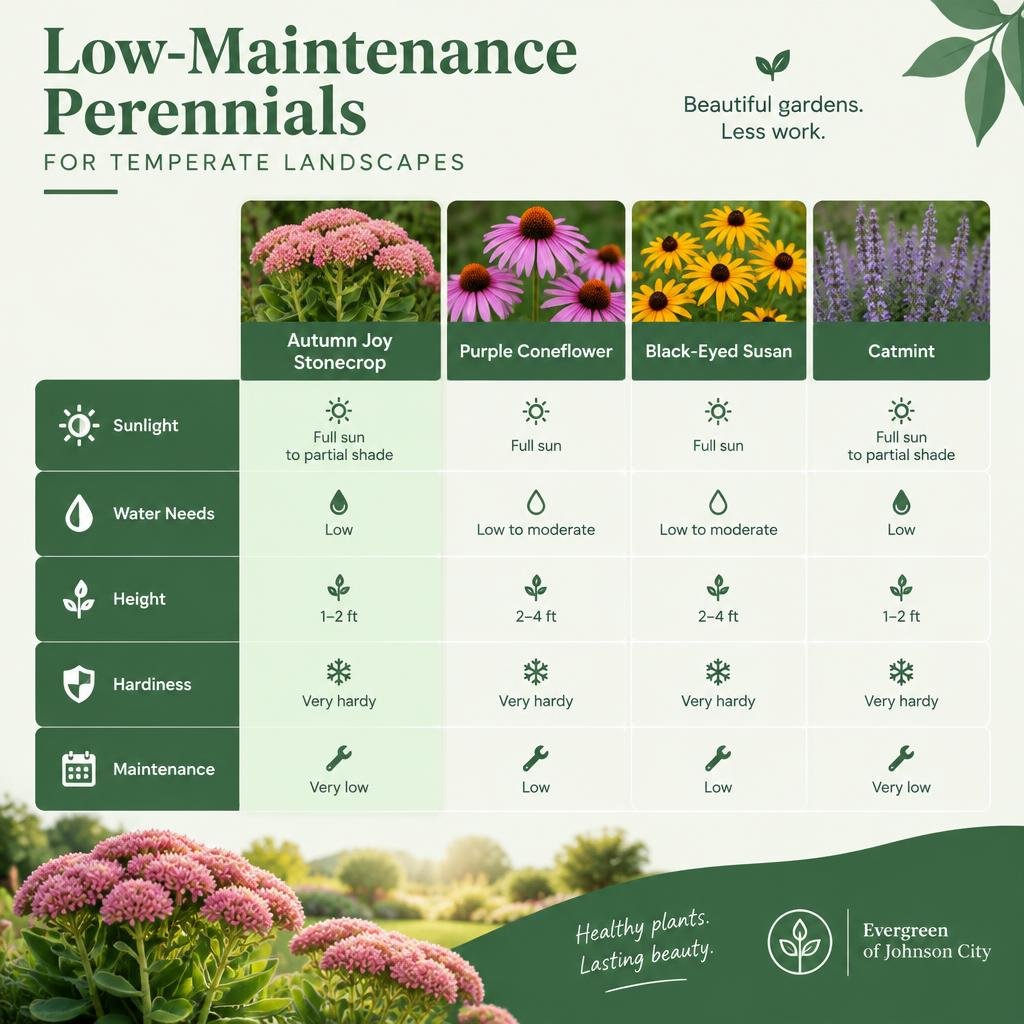
Autumn Joy Stonecrop is more than just a pretty face; it’s a true workhorse perennial, celebrated for its structural integrity and multi-seasonal appeal. With an impressive lifespan of up to 15 years, this succulent plant provides enduring beauty and stability to any garden design. It is remarkably hardy, thriving across a broad range of USDA zones, typically from 3 to 9, meaning it can withstand temperatures as low as -40°F.
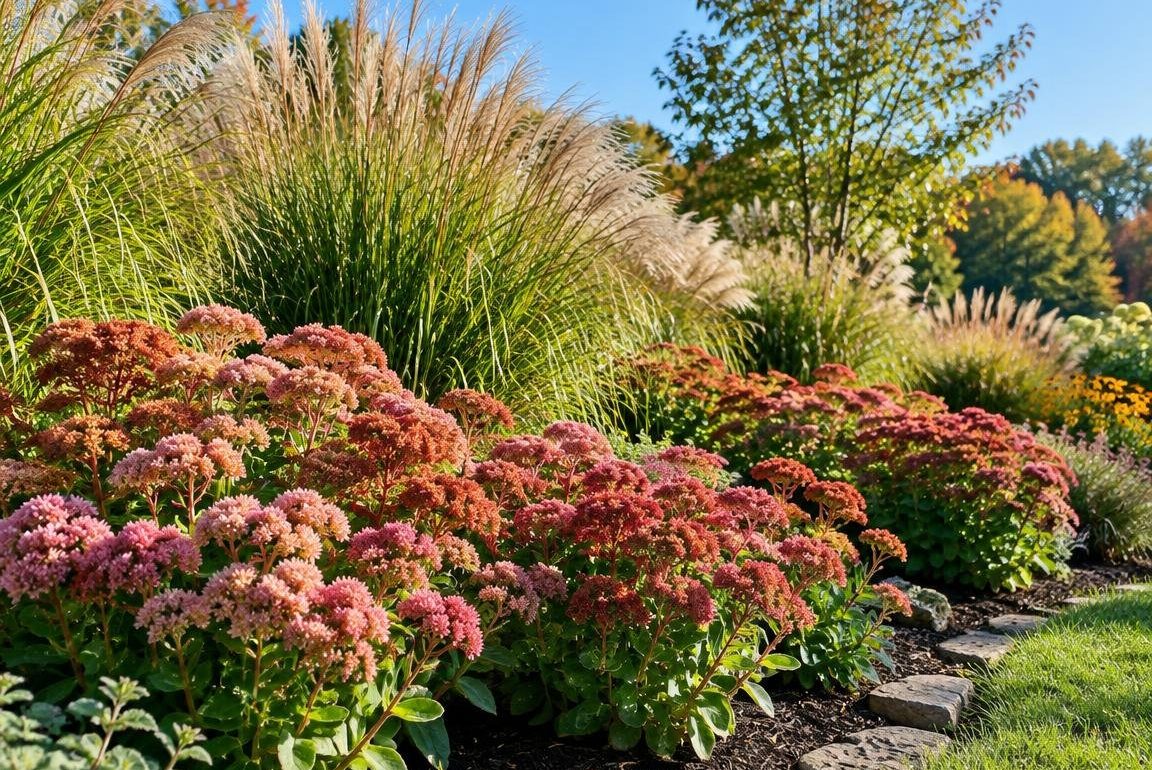
Its seasonal interest begins in spring with fresh, green succulent foliage. By mid-summer, tight, broccoli-like salmon-pink buds emerge, gradually opening to a vibrant display of pink flowers in late summer. As autumn progresses, these blooms deepen, transforming into rich, coppery-red hues that provide a spectacular late-season color burst. Even after the blooms fade, the persistent seed heads remain, offering intriguing winter architecture and a valuable food source for birds. This sustained visual interest, combined with its appeal to pollinators for late-season nectar, makes Autumn Joy an indispensable plant. Its distinction is further solidified by having received the prestigious Award of Garden Merit from the Royal Horticultural Society in 1993, a testament to its reliability and ornamental value.
Designing Multi-Season Landscapes with Structural Perennials
Integrating structural perennials like Autumn Joy Stonecrop into your garden design allows for dynamic, multi-seasonal interest that evolves throughout the year. Its robust form and changing colors make it an ideal candidate for various landscape applications, from creating bold mass plantings to defining elegant border edging. For those in drier climates or seeking water-wise solutions, Autumn Joy is a cornerstone of xeriscaping and even contributes to fire-wise landscaping strategies due to its succulent nature. It’s equally at home nestled in crevice gardens or serving as a vibrant container focal point on a patio.
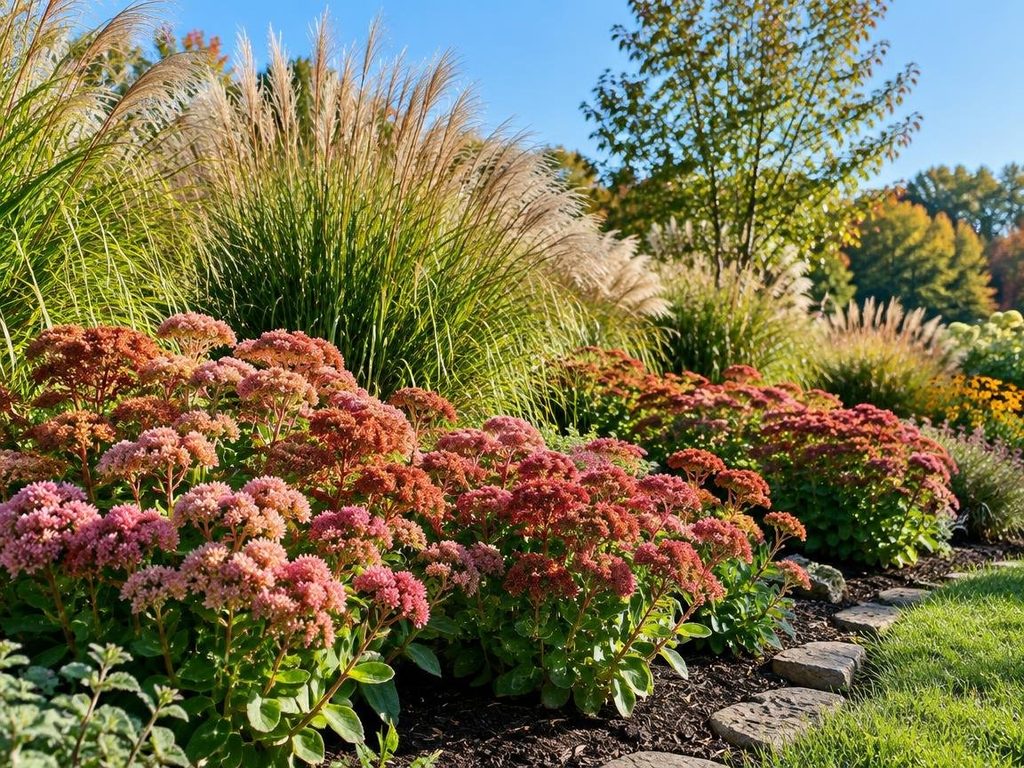
When planning your layout, consider grouping Autumn Joy in clusters of three or more plants. This creates a powerful visual statement and enhances the impact of its seasonal color transitions. For instance, a sweep of these plants along a sunny pathway can guide the eye and provide continuous color from late summer well into winter.
Visual Structure Across the Seasons
One of Autumn Joy Stonecrop’s most compelling attributes is its ability to provide visual structure and interest across all four seasons. In spring, its fresh, green rosettes emerge, signaling the start of the growing season. By summer, the distinctive, tight, “broccoli-like” buds form, adding a unique texture to the garden before they burst into bloom. Late-summer brings a flush of soft pinks, which gradually deepen into autumnal bronze and rusty reds as the days shorten.
Even as winter descends, the dried flower heads and sturdy stems remain upright, creating fascinating winter architecture. These persistent structures catch frost patterns, adding delicate beauty to an otherwise dormant landscape, and provide essential shelter for beneficial insects and birds. This year-round presence ensures your garden never truly sleeps, offering something beautiful to observe even in the coldest months.
Sourcing Native Companions at Local Garden Centers
To truly maximize the visual impact and ecological benefits of your garden, pairing Autumn Joy Stonecrop with complementary plants is key. The goal is to create a tapestry of textures, colors, and forms that thrive under similar conditions, particularly drought-tolerant ones. Local garden centers are excellent resources for finding these companion plants, often carrying varieties that are well-suited to your regional climate and support local wildlife.
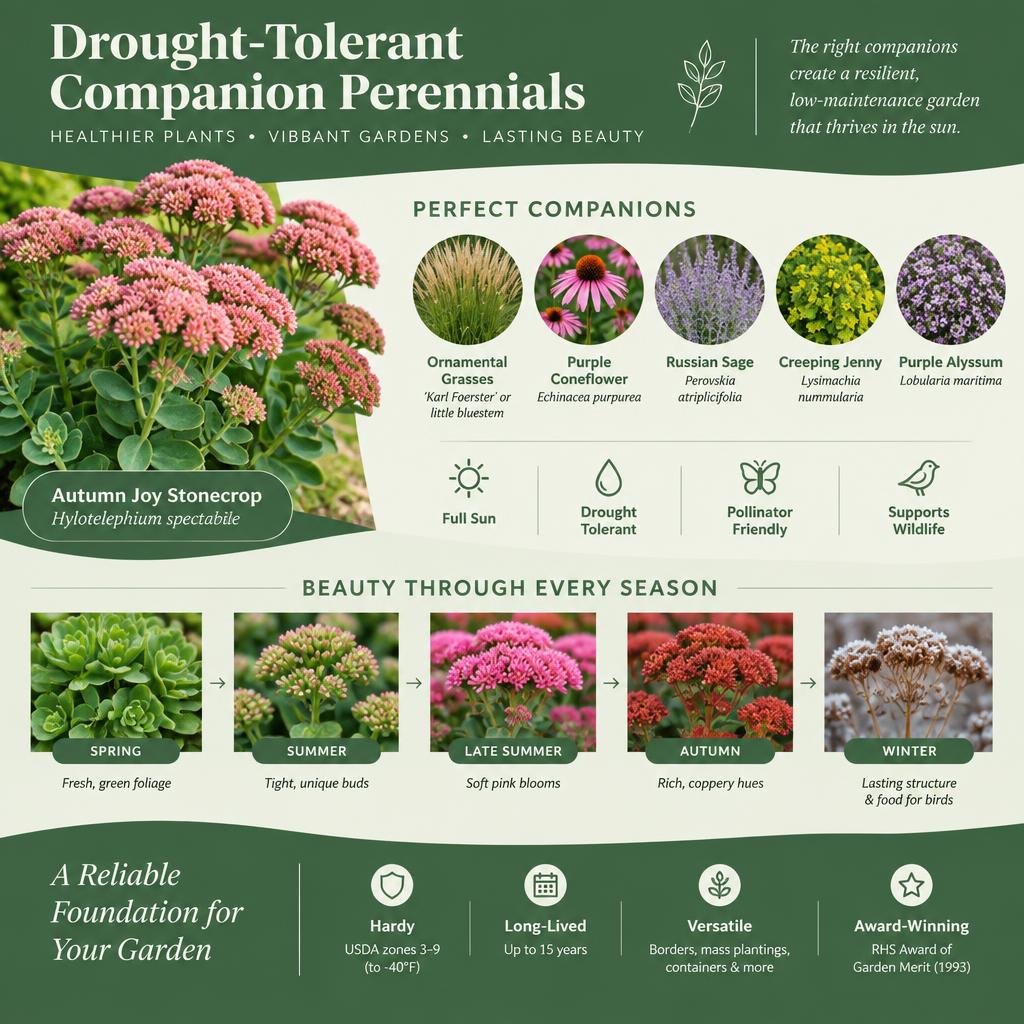
We often recommend combining Autumn Joy with ornamental grasses such as ‘Karl Foerster’ feather reed grass or little bluestem. Their fine textures and swaying movements provide a beautiful contrast to the stonecrop’s sturdy, succulent form. Other excellent choices include Echinacea purpurea (purple coneflower) for its long-lasting blooms and pollinator appeal, and Russian sage (Perovskia atriplicifolia) with its airy, silver foliage and lavender flowers. For groundcover or trailing elements in containers, creeping jenny (Lysimachia nummularia) or purple alyssum can spill over edges, softening the overall look. These combinations not only create a visually appealing garden but also contribute to a resilient, low-maintenance ecosystem.
Essential Cultivation, Maintenance, and Pruning Strategies
To ensure your Autumn Joy Stonecrop thrives and remains a highlight in your garden, understanding its essential cultivation and maintenance requirements is crucial. This perennial is renowned for its adaptability, but providing optimal conditions will unlock its full potential. Full sunlight is paramount; Autumn Joy performs best with at least six hours of direct sun daily. Inadequate light can lead to leggy growth and reduced flowering.
The plant’s succulent nature means it demands excellent drainage. Gravelly soils or those amended with grit or sand are ideal. Heavy, water-retentive clay soils can lead to root rot, a common issue for sedums. Overwatering prevention is key, especially after establishment. While young plants need regular watering to develop a strong root system, mature Autumn Joy is drought-tolerant and prefers to dry out between waterings. When planting, ensure proper spacing of 18-24 inches between plants to allow for good air circulation, which further helps prevent fungal issues.
Pruning and the Chelsea Chop
One of the most effective techniques for maintaining a tidy, robust Autumn Joy Stonecrop is the ‘Chelsea Chop’. This method involves pinching or cutting back the stems by about one-third to one-half their height in late spring or early summer (typically around late May or early June, coinciding with the Chelsea Flower Show, hence the name).

The benefits of the Chelsea Chop are numerous:
- Height Control: It prevents the plant from growing too tall and leggy.
- Stem Strengthening: By encouraging branching, it creates a bushier plant with stronger stems, reducing the likelihood of flopping later in the season, especially after heavy rains.
- Flopping Prevention: This is particularly useful in areas with rich soil or partial shade where sedums might otherwise become top-heavy and splay open.
- Delayed Bloom Timing: While it slightly delays the bloom time, it often results in a longer overall flowering period with more, albeit smaller, flower heads.
- Bushy Habits: The plant develops a denser, more compact form, enhancing its structural appeal.
Beyond the Chelsea Chop, general maintenance involves removing spent flower heads in late winter or early spring before new growth emerges. This isn’t strictly necessary for the plant’s health but keeps the garden looking tidy and prevents self-seeding if desired. Avoid pruning after September 1st, as new growth stimulated late in the season can be vulnerable to early frosts.
Long-Term Plant Health and Pest Management
For long-term plant health, consistent deep root soaking during dry spells is more beneficial than frequent, shallow watering. Allow the soil to dry out completely between waterings to mimic its natural arid habitat. Incorporating organic topdressing, such as a thin layer of compost, annually in spring can improve soil structure and provide slow-release nutrients without over-fertilizing, which can also contribute to flopping.
Mature clumps of Autumn Joy can be divided every 3-4 years in early spring to rejuvenate the plant and prevent overcrowding. This also provides an opportunity to propagate new plants.
While generally robust, Autumn Joy can occasionally encounter pests. Aphid management can be addressed with a strong spray of water or insecticidal soap if infestations are significant. Slugs can be a nuisance, especially in moist conditions; keeping the soil surface dry and using organic slug baits can help. The most common disease concern is stem rot or root rot, almost always a result of overly wet soil or poor drainage. Ensuring proper planting conditions and avoiding overwatering is the best preventative measure.
For Autumn Joy grown in containers, special considerations are needed for winter care. While the plant is hardy in the ground, potted plants are more vulnerable to freeze-thaw cycles. We recommend moving containers to a sheltered location, such as an unheated garage or against a protected wall, to provide root insulation. Ensure good drainage holes are present and minimize winter moisture to prevent the roots from rotting.
Frequently Asked Questions About Perennial Landscaping
Gardening with perennials like Autumn Joy Stonecrop often brings up a few common questions, especially for those new to low-maintenance landscaping. We’ve compiled answers to some of the most frequent inquiries to help you cultivate a thriving and beautiful garden.
What are the ideal growing conditions for Autumn Joy Stonecrop?
Autumn Joy Stonecrop flourishes in conditions that mimic its natural, often rocky, habitat. For optimal health and bloom production, it requires full sunlight, meaning at least six hours of direct sun exposure daily. The plant is highly adaptable to various soil types but absolutely demands well-drained soil. Gravelly substrate or sandy loam is ideal, as it prevents waterlogging, which can quickly lead to root rot. It prefers low fertility soils; overly rich soil can encourage lush foliage at the expense of flowers and contribute to leggy growth. Once established, it is exceptionally drought tolerant and requires only moderate watering, allowing the soil to dry out completely between applications. These conditions collectively ensure a robust and floriferous plant.
How do you prevent upright sedum varieties from flopping?
Flopping, where the stems splay outwards and fall over, is a common concern with some upright sedum varieties, particularly if conditions aren’t ideal. Several strategies can effectively prevent this:
- Chelsea Chop: As discussed, performing this late-spring pinching or cutting back of stems by one-third to one-half encourages bushier growth and stronger stems.
- Full Sun Exposure: Planting in full sun exposure is critical. Plants grown in partial shade tend to stretch for light, resulting in weaker, elongated stems more prone to flopping.
- Reduced Nitrogen: Avoid excessive fertilization, especially with high-nitrogen fertilizers. Nitrogen promotes leafy growth, which can make stems weak. Autumn Joy thrives in low-fertility soil.
- Dividing Mature Clumps: Overcrowded, mature clumps can sometimes become weak. Dividing mature clumps every few years rejuvenates the plant and encourages stronger, more upright growth.
- Proper Spacing: Ensure adequate 18-24 inch spacing between plants to allow for good air circulation and prevent competition for light.
Can drought-tolerant perennials survive winter in containers?
While Autumn Joy Stonecrop is incredibly hardy in the ground (USDA Zones 3-9), container-grown perennials face unique challenges during winter. The soil in pots freezes much more thoroughly and repeatedly than garden soil, which insulates roots more effectively. However, with a few considerations, your potted Autumn Joy can certainly survive:
- Drainage Holes: Ensure the container has ample drainage holes to prevent water from pooling and freezing, which can cause root rot.
- Root Insulation: Provide root insulation. This can be achieved by wrapping the container in burlap, bubble wrap, or placing it inside a larger, insulated container.
- Freeze-Thaw Protection: Move the container to a sheltered placement such as an unheated garage, shed, or against a protected wall of your house. This protects the roots from extreme temperature fluctuations and harsh winds.
- Minimal Winter Moisture: Reduce watering significantly. The plant is dormant and requires very little moisture. Water only sparingly on warmer days if the soil is completely dry, but avoid overwatering.
- Container Material: Terracotta pots, while attractive, can crack during freeze-thaw cycles. Plastic or fiberglass pots are more durable in winter conditions.
Conclusion
As we plan our gardens in October 2026 and beyond, the timeless appeal and remarkable resilience of Autumn Joy Stonecrop stand out. This exceptional perennial offers a compelling solution for gardeners seeking both beauty and ease. Its ability to provide sustained garden structure and vibrant color from spring through winter, coupled with its low-maintenance requirements, makes it an invaluable asset in any landscape.
By understanding its ideal growing conditions, employing smart design strategies like mass plantings and thoughtful companion pairing, and utilizing simple cultivation techniques such as the Chelsea Chop, we can ensure Autumn Joy thrives. Its drought tolerance, deer resistance, and immense value to pollinators further cement its role in creating ecologically rich and sustainable gardening practices.
The journey to a beautiful and resilient garden often begins with expert advice. Consulting with your local family-owned garden center can provide the guidance and quality plant material needed to transform your landscape into a vibrant, multi-seasonal haven. Embrace the enduring charm of Autumn Joy Stonecrop, and enjoy a garden that offers joy throughout the year with minimal fuss.