
How to Plan a Closet That Works for Real Life
A well-planned closet should make everyday routines easier, not simply create a polished look for photos!
Whether you are updating a reach-in closet, building a walk-in closet, or considering tailored closets and garage cabinets, the best plan begins with the items you actually own and how you use them. It should reduce the time spent searching for a missing shoe, moving piles from one surface to another, or trying to make seasonal clothing fit beside everyday essentials.
There is no single perfect closet layout. A family sharing one space, a frequent traveler, a remote worker, and someone with a compact wardrobe will each need different storage priorities. The goal is to give every important item a logical, reachable home. A layout that feels intuitive is usually easier to keep organized because putting something away requires very little thought or effort.
Why Function Comes First
Although a closet is an enclosed storage area, it works best when it is treated as part of a daily routine. A beautiful layout can still fail if shirts are buried behind long dresses, shoes block the floor, or frequently used accessories have no assigned place. Function-first planning reduces those friction points.
Instead of designing around an ideal wardrobe, design around the current one. Count the clothes that hang, are folded, are stacked, or need special care. Include shoes, bags, laundry, workout gear, coats, and seasonal items. This creates a realistic starting point for decisions about rods, shelves, drawers, and open space.
It can also help to identify the items that create the most clutter. For example, a closet may have plenty of hanging space but too little room for folded workout clothing, handbags, or shoes. Solving the actual bottleneck is more useful than adding storage features simply because they look appealing in a showroom or online photo.
Start With Daily Habits
Before purchasing organizers or scheduling installation, observe how the closet is used for one week. Notice what you reach for in the morning, what gets dropped on a chair, and what is hard to put away. These patterns reveal where the layout needs to work harder. If an item is repeatedly left outside the closet, that may indicate its assigned location is inconvenient, too crowded, or difficult to access.
- Keep everyday clothing near eye level or within easy reach.
- Identify items used for work, travel, exercise, formal events, or hobbies.
- Decide whether laundry sorting, dressing, and shoe storage happen in the same room.
- Give each person a clear area when the closet is shared.
- Move rarely used items away from prime storage locations.
- Consider where clean laundry is typically folded and where outfits are selected.
Think about the sequence of each routine, not just the categories of belongings. Someone who dresses for work before sunrise may value lighting and visible outfit options. Someone who travels often may benefit from a place for luggage, packing cubes, and a temporary hanging area for garments that need to be packed or steamed.
Measure the Space Before Choosing Storage
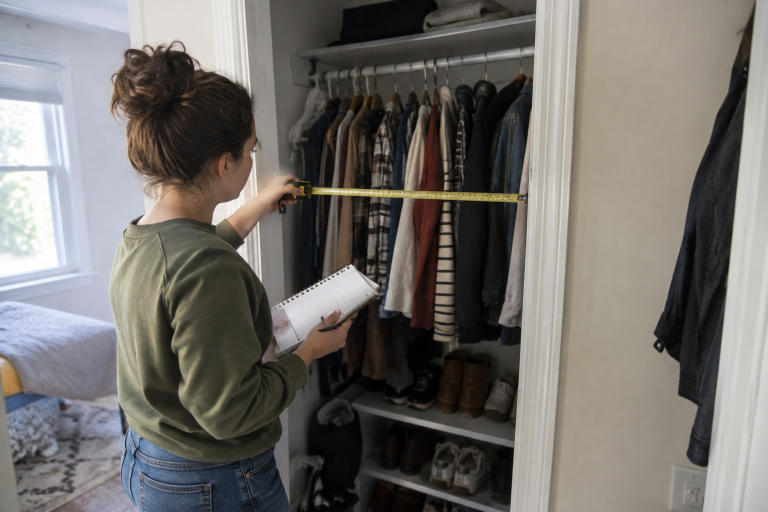
Measurements should come before product choices. Record the closet’s width, height, and usable depth, then photograph every wall. Mark door swings, trim, baseboards, outlets, vents, switches, sloped ceilings, and existing rods or shelves. A few missed inches can interfere with drawers, doors, walkways, or hanging garments.
Create a simple checklist as you measure:
- Wall-to-wall width at more than one height
- Floor-to-ceiling height
- Depth from the back wall to the door opening
- Clearance around the door and any nearby furniture
- Locations of fixed features that cannot move
- Space needed for drawers, pull-out components, and comfortable movement
Measure hanging garments as well as the room itself. Longer pieces such as dresses, coats, and robes need more vertical clearance than shirts or skirts. Checking these dimensions early helps prevent a common problem: installing a lower rod or shelf that causes longer garments to bunch up near the floor.
Build Storage Zones That Make Sense
Zones make it easier to find items and return them after use. They also prevent one category from taking over the entire closet. The clearest zones are based on both the frequency and type of use, so the items used most often remain convenient, while occasional items stay available without occupying the best locations.
- Daily zone: Put commonly worn clothing and accessories in the most convenient locations.
- Hanging zone: Separate short garments from long garments so that the empty vertical space is not wasted.
- Folded-storage zone: Use shelves or drawers for sweaters, denim, sleepwear, and athletic clothing.
- Shoe zone: Keep frequently worn pairs visible and easy to remove without disturbing other items.
- Accessory zone: Assign homes for belts, bags, scarves, jewelry, and hats.
- Seasonal zone: Reserve higher shelves or another storage area for items not currently in regular use.
Within each zone, use simple groupings that match your habits. Work shirts can be together, for instance, while casual tops are stored separately. A system does not need to be overly detailed to work well; it simply needs enough consistency so that every item has an obvious place to return after laundry day or a busy morning.
Choose the Right Closet Features
Every feature should solve a specific storage problem. Drawers protect small or folded items from dust and visual clutter. Adjustable shelves can accommodate changing stacks, bags, or shoe sizes. Double-hanging rods can create more capacity for shorter garments, such as shirts, skirts, and folded pants.
Consider pull-out racks for belts or ties, a valet rod for planning outfits and packing, and closed cabinets for infrequently used belongings. Lighting is also practical, especially in deep or dark closets, because it makes colors, labels, and stored items easier to see.
Open shelving works best when the contents are easy to identify and regularly used. Closed storage can be preferable for items that look visually busy, collect dust, or are only needed occasionally. Before selecting specialty features, ask whether they will be used often enough to justify the space they occupy.
Make a Small Closet Work Harder
Small closets benefit from restraint. Use vertical wall space when it is safe and appropriate, but avoid filling every open area with containers. Too many bins can make access slower and hide items that should be used regularly. In a compact space, being able to see and reach the essentials often matters more than storing every possible item inside the closet.
- Keep the floor as clear as possible.
- Use slim storage in narrow areas.
- Place lightweight accessories on the back of the door.
- Store off-season clothing elsewhere when practical.
- Group items by category before arranging them by color.
- Remove duplicates or damaged items that no longer serve a purpose.
Uniform hangers and clearly defined shelf categories can make a small closet feel calmer and easier to manage, but they are optional. The more important consideration is avoiding stacks that are too high to remove from without toppling or containers that must be moved every time you need a basic item.
Plan for Changing Needs
A closet should remain useful when routines change. Adjustable components can help children’s storage evolve, give partners clearer ownership zones, or support a move to a new home. Leave some unused capacity rather than packing every shelf and rod to its limit. A little breathing room makes it easier to accommodate gifts, replacement clothing, laundry, and changing seasonal needs.
Accessibility also matters. Lower drawers, easy-pull hardware, clear floor space, and frequently used items within a comfortable reach can improve day-to-day use. The ADA reach-range guidance can offer a helpful reference point when planning accessible elements, particularly in spaces designed around mobility needs.
Flexibility can be especially valuable in shared households. Adjustable shelves and rods make it easier to rebalance storage when one person needs more hanging space, another needs more drawer space, or a closet begins to serve an additional purpose, such as linen storage or a dressing area.
Avoid Common Closet Planning Mistakes
- Buying organizers before measuring the room and inventorying belongings.
- Give rarely used items to the easiest-to-reach locations.
- Forgetting to plan for shoes, bags, accessories, and laundry.
- Choosing fixed storage when needs are likely to change.
- Using open shelving without considering dust and visual clutter.
- Decorating the space before deciding how it should function.
- Overfilling shelves and rods until items become difficult to remove or return.
- Creating a complicated sorting system that is unrealistic to maintain.
Create a Maintenance Plan
The most successful closet system is simple enough to maintain during a busy week. Spend five minutes once a week returning items to their zones, clearing the floor, and setting aside anything that needs repair, laundering, or donation. Review seasonal clothing twice a year and reassess the layout whenever a household routine changes.
A maintenance plan does not need to involve a complete reorganization. Small resets are often enough: return shoes to their designated area, refold a shelf that has become uneven, and remove empty hangers or packaging. Keeping a donation bag or designated box nearby can also make it easier to act on items that no longer fit, feel comfortable, or suit your lifestyle.
Common Questions
How Much Hanging Space Does a Closet Need?
Count the garments you currently hang and separate them by length. The amount of hanging space should reflect that count, plus reasonable room for incoming laundry and occasional additions. If your hanging area is crowded, first confirm whether the issue is too little rod space or whether long and short garments could be arranged more efficiently.
Are Drawers Better Than Shelves?
Neither is universally better. Drawers are useful for smaller folded items, while shelves can work well for bulky clothing, shoes, bins, and bags. Many closets need both. Choose the option that makes it easier to see what you own and put it away without creating unstable stacks.
How Often Should a Closet Be Reorganized?
Use quick weekly resets, seasonal reviews, and a larger reassessment whenever your clothing, household, mobility, or daily routine changes. Reorganizing is also useful after a major purchase, a change in work schedule, or a shift in how the room is shared.
Conclusion
A useful closet is not defined by its size or decoration. It is defined by how well it supports real life. When measurements, zones, features, and maintenance habits work together, even an awkward or crowded closet can become easier to use every day. The best result is a system that feels natural enough to use consistently, with storage that supports both today’s needs and future changes.