
Are Swim Spas Worth It? An Honest Look at the Pros and Cons
If you’re thinking about installing a swim spa in your home, keep reading!
If you’re weighing whether a swim spa deserves a spot in your backyard and your budget, here’s the short answer: a swim spa is worth it if you want year-round swimming, low-impact exercise, and hot tub relaxation in one footprint—but only if you’ve planned for the upfront cost, electrical requirements, and ongoing maintenance. Let’s break down both sides honestly so you can decide with confidence.
What Is a Swim Spa, Exactly?
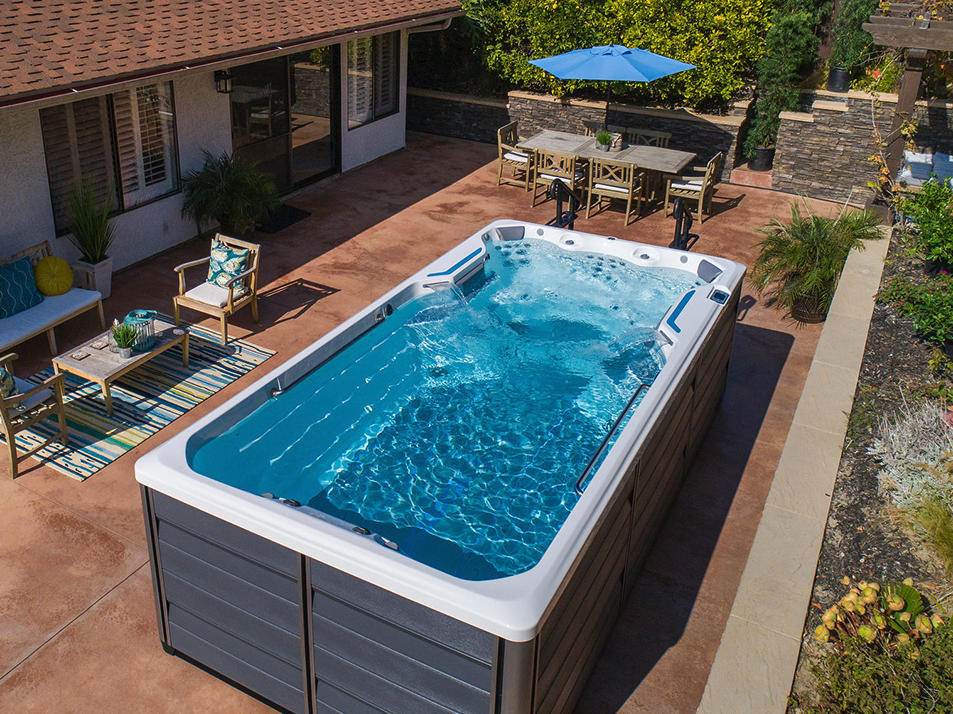
A swim spa is a hybrid between a pool and a hot tub. It’s a self-contained unit, typically 12 to 19 feet long, that generates a continuous current you can swim against in place. Many models also include a heated spa section with hydrotherapy jets, giving you a fitness pool and a hot tub in a single unit that fits where a full-size pool never could.
The Pros of Owning a Swim Spa
1. Year-Round Use
Unlike most residential pools, swim spas are heated and insulated for use in every season. Whether it’s a chilly January morning or a humid August evening, the water is ready when you are. For swimmers who train regularly, that consistency is a game-changer.
2. Compact Footprint
A swim spa delivers the function of a lap pool in roughly one-quarter of the space. If your yard can’t accommodate a 40-foot pool—or your HOA has restrictions—a swim spa often fits on an existing patio or reinforced deck.
3. Low-Impact Fitness
The adjustable current lets you swim, jog, or row against resistance without the joint stress of pavement running. Physical therapists frequently recommend aquatic exercise for arthritis, injury recovery, and mobility work, and a swim spa puts that therapy steps from your back door.
4. Two Experiences in One
Dual-zone models pair a swim lane with a dedicated hot tub section, each with independent temperature control. The family can swim at 82 degrees while you soak at 102. That versatility is something neither a pool nor a standalone hot tub can match.
5. Lower Lifetime Cost Than an Inground Pool
While not cheap, a swim spa generally costs less than an in-ground pool once you factor in excavation, decking, fencing, and long-term upkeep. It also uses far less water and fewer chemicals, which keeps monthly operating costs manageable.
The Cons of Owning a Swim Spa
1. Significant Upfront Investment
Quality swim spas typically range from $20,000 to $50,000 or more, depending on size, jet systems, and features. Add delivery, a reinforced pad, and electrical work, and the total climbs. This is a considered purchase, not an impulse buy.
2. Electrical and Site Requirements
Most swim spas require a dedicated 50- to 60-amp, 240-volt circuit installed by a licensed electrician. You’ll also need a level, structurally sound surface—usually a concrete pad—capable of supporting 15,000 to 25,000 pounds of filled weight.
3. Ongoing Maintenance
Swim spas need regular water testing, chemical balancing, and filter cleaning, plus periodic drain-and-refill cycles. It’s less work than a pool, but it isn’t zero. Budget a few hours a month and a modest chemical expense.
4. Not a True Pool Replacement for Everyone
If your vision involves cannonballs, diving, and pool parties for a dozen kids, a swim spa’s swim lane will feel limiting. It excels at exercise and relaxation—not large-scale recreation.
5. Energy Costs in Extreme Climates
Heating water year-round costs money. Well-insulated models keep this reasonable, but expect a noticeable bump in your utility bill during colder months, especially if you keep the swim zone warm.
So, Who Should Buy a Swim Spa?
A swim spa makes the most sense for homeowners who want regular, low-impact exercise; families seeking year-round water access without pool-scale construction; and anyone recovering from injury or managing chronic joint pain. If you’re considering buying a swim spa in Charleston, SC, the mild coastal climate works strongly in your favor—shoulder seasons stay swimmable, winter heating costs remain modest, and a covered unit shrugs off summer humidity and salt air far better than an open pool.
How to Decide With Confidence
Before you commit, do three things. First, wet test the models you’re considering—actually swim against the current at a dealer showroom. Second, get a written quote that includes delivery, crane service if needed, the concrete pad, and electrical installation so there are no surprises. Third, ask about insulation ratings and estimated monthly operating costs for your climate.
Are swim spas worth it? For the right buyer, absolutely. You’re trading a larger upfront investment for year-round fitness, therapy, and relaxation in a compact, energy-conscious package. Go in with clear expectations about cost and upkeep, choose a reputable local dealer, and a swim spa can deliver value—and daily use—for a decade or more.